 Boat People

About the Boat people
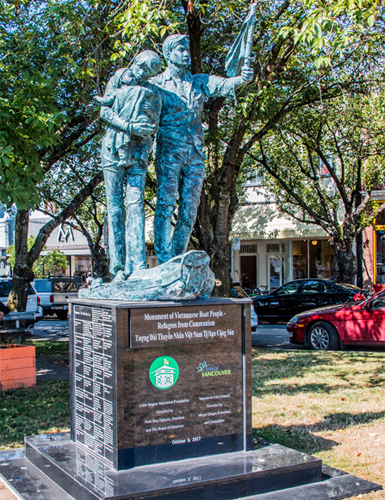
The reason why the Boat people left Vietnam
When the North Vietnamese Communists conquers the South and won the war, they imposed totalitarian dictatorship. We the people of South Vietnam lost all the freedom.
Anyone that criticized the regime was imprisoned.
In Vietnam, anyone that wanted to leave the area had to gain permission from authorities and be documented for any visits. After the South lost, the North stole from the South and brought valuables to the North.
The Communists took cruel revenge on the soldiers, civil servants, staff, and any others who were related to the Republic of Vietnam's regime. They sent them to prison camps known as re-education camps in the dangerous jungle. As slaves in the jungle, they had to work on the farms, clearing landmines in the field. The Communists robbed the previous soldiers that participated in the War, stealing their properties and personal belongings.
Do Muoi, their senior leader was a General Secretary for two consecutive terms from 1991 to 1997.
Do Muoi declared in front of the US Embassy in Saigon on February 20, 1976 at 10:15 a.m. that
"Liberating the South, we have the right to confiscate property, requisition houses and factories. , their land. The car we drove, their wives we took, their children we enslaved. As for them, we exiled them to hard labor in the new economic zone into the deep forests of poisonous water. They will die slowly…”
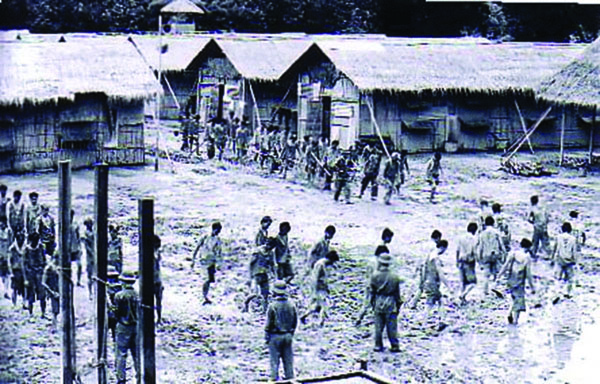
Descendants of the former government employees were not allowed to go to university. Instead, the Communists created an organization called "Young Volunteer Group.” This group was made up of the descendants and they were sent to the jungle as slaves. The young volunteers were forced to work in the wilderness to clear poisonous forests, plunder the property of the military families, and brought people to new economic zones. In order to impoverish the nation, they stole everybody’s money distributed it equally to the nation. Regardless of your socioeconomic background, each person received an equal amount of just 200 VND.
Because of the above reasons, people in the South could not stand the injustice going on in Vietnam. Instead, they were willing to accept any life threatening risks when leaving Vietnam by boat and sailing off to seek refuge in order to find freedom and democracy.
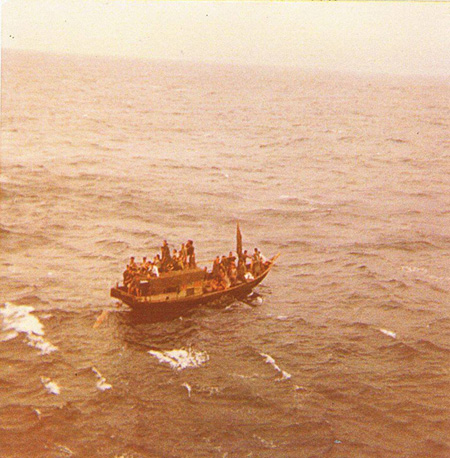
According to official research papers, mainstream Vietnamese communities began arriving in Canada in the middle 1970s following the end of the Vietnam War. They were prepared to risk everything. Those who took to the ocean in tiny overcrowded ships were dubbed the “boat people.” The survivors sometimes languished for years in refugee camps. Some were taken in by countries like Canada.
Between 1975 and 1976, Canada admitted 5,608 Vietnamese immigrants. Due to the public outcry, in 1979, Canadian government decided that the number of “Boat People” brought to Canada should be dependent on public support. In July 1979, it introduced a matching formula: the government will sponsor one refugee for each one sponsored privately. Churches, corporations or groups of five or more adult Canadian citizens were eligible to sponsor refugees directly.
By 1985, 110,000 Vietnamese refugees had settled in Canada. The “Boat People” were internally diverse: they included a variety of social classes and both urban and rural dwellers. The majority did not speak English or French and had no relatives in Canada. They also arrived during a period of economic downturn in Canada. These factors led to a struggle to integrate into Canadian society and to achieve economic independence.
They were prepared to risk everything. In the years following the Vietnam War, over one million refugees fled the war-ravaged countries of Vietnam, Cambodia and Laos. Those Vietnamese who took to the ocean in tiny overcrowded ships were dubbed the “boat people.” The survivors sometimes languished for years in refugee camps. The luckier ones were taken in by countries like Canada.